
When I’m teaching my animation students, one of the first things I tell them is:
“The clarity of your description determines the quality of your creation.”
Whether they’re designing a character in Runway ML or writing a story in ChatGPT, the same truth applies — vague directions create vague results.
And honestly? It’s no different for entrepreneurs and business owners using AI in their branding.
AI is only as powerful as your prompt. The way you describe what you want determines what you get — in art, in business, and in life.
Why Descriptive Prompts Matter
A prompt is more than a command; it’s communication. It’s your chance to give an intelligent system — or your creative team — the clarity it needs to produce what you actually envision.
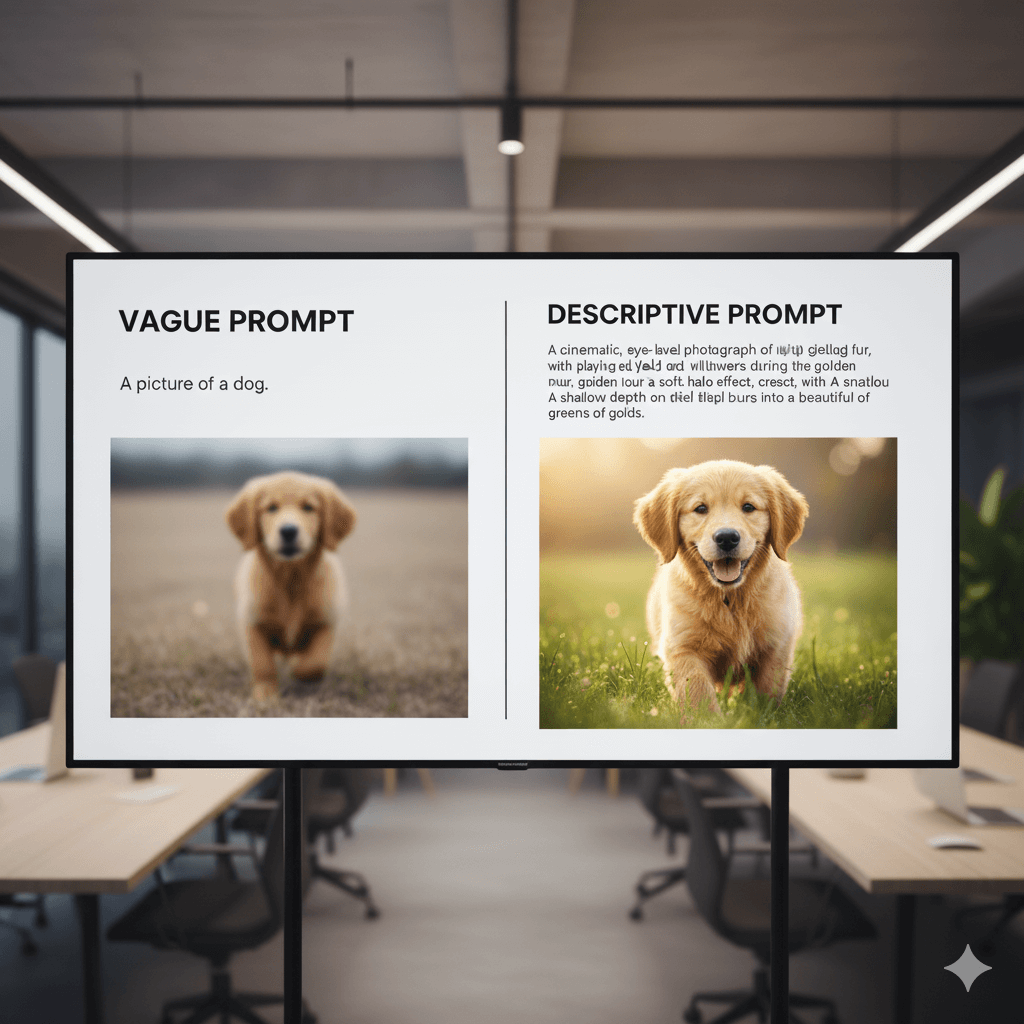
When my students write prompts like, “make an animation of a girl walking,” the results are okay. But when they say, “create a smooth, 3-second animation of a teenage girl walking confidently across a city street at sunset, headphones on, smiling slightly,” suddenly the image comes alive.
That’s the power of descriptive AI prompts.
In entrepreneurship, this translates directly to how you brief AI tools (or even human partners).
- ❌ “Write a caption about my coaching business.”
- ✅ “Write a warm, empowering Instagram caption that inspires women in business to stop overthinking and take action — include one call-to-action to download my free worksheet.”
Same tool. Different clarity. Dramatically different results.
Your Prompt Reflects Your Brand Clarity
The way you prompt AI is often a mirror of how clearly you understand your own brand.
If you can’t describe your tone, audience, or purpose, your AI results will sound generic — because your direction was.
When I’m consulting clients, I can tell who’s still defining their brand voice by the prompts they give me. Someone who knows their brand might say:
“Use a confident, conversational tone like Kimberly Spidle — motivational, but not preachy. Speak to career-driven women who crave clarity and alignment.”
That’s not just a good prompt. That’s brand identity in words.
Prompts don’t just create clarity — they reveal it.
How to Write Effective AI Prompts
Here’s the framework I teach in my workshops and classrooms:
The P.R.O.M.P.T. Framework
| Letter | Meaning | Example |
|---|---|---|
| P – Purpose | What’s the goal? | “I want to create an educational blog post.” |
| R – Role | Who is AI acting as? | “You are an experienced content strategist.” |
| O – Outcome | What do you want delivered? | “Write a 600-word blog post.” |
| M – Message | What’s the tone or key idea? | “Keep it empowering and practical.” |
| P – Parameters | What are the limits? | “Use three sections and one call-to-action.” |
| T – Target | Who is it for? | “Entrepreneurs juggling business and life.” |
This simple structure ensures your prompt gives AI everything it needs to deliver results that align with your brand — not just a generic response.
Common AI Prompt Mistakes (and How to Fix Them)
If you’ve ever said, “ChatGPT didn’t get it right,” it’s probably because of one of these:
- Too vague: “Write something about my brand.”
- 🔁 Fix: Add specifics about tone, audience, and purpose.
- Too overloaded: “Write a funny but professional, trendy yet classic caption that sells but doesn’t sound salesy.”
- 🔁 Fix: Focus on one clear intention.
- No context: “Write an email.”
- 🔁 Fix: Tell AI why, for whom, and what result you want.
Just like my students learned to describe lighting, motion, and emotion in their animations, entrepreneurs must learn to describe voice, tone, and outcome in their AI work.
Clarity as a Brand Habit
Learning to prompt descriptively is more than a tech skill — it’s a mindset.
It trains you to:
- Communicate your vision clearly.
- Think strategically about your audience.
- Lead with intention instead of reaction.
That’s the foundation of every strong brand and every sustainable business.
Whether I’m teaching students how to describe a scene or coaching a client through their brand voice, I always say:
“AI can’t read your mind — but it can mirror your clarity.”
When you prompt with precision, you’re not just using a tool — you’re exercising leadership, creativity, and brand alignment all at once.
Final Thoughts: Describe It. Don’t Wing It.
The next time you open ChatGPT, Gemini, or any AI platform, take an extra 60 seconds to describe what you really want.
Define the tone. The role. The goal. The outcome.
Because a good prompt gets results.
But a descriptive prompt builds brands.
✨ Ready to bring more clarity, creativity, and confidence into how you use AI?
Let’s refine your brand voice and your prompts — together.
Book a Brand Strategy Session and learn how to turn your words into tools that work for you, not against you.