

Every great story — whether it’s a movie, a brand campaign, or a personal transformation — follows a rhythm. There’s a beginning, a middle, and an end. Simple, right? Yet that structure, called a story arc, is what pulls us in, keeps us emotionally invested, and leaves us changed by the time the credits roll.
And just like every movie has a hero’s journey, every brand does too. Your brand story isn’t just about what you do — it’s about what you overcame, how you transformed, and what you’re teaching others along the way.
I’ve used story arcs everywhere — in my own content, with my students at Philmore Academy, and with clients building personal and business brands. When someone truly understands their brand story arc, their message stops sounding like marketing and starts feeling like meaning.
What Is a Story Arc, Really?
A story arc is the emotional journey your audience experiences as they move through your story. It’s not about adding drama or fluff — it’s about creating connection.
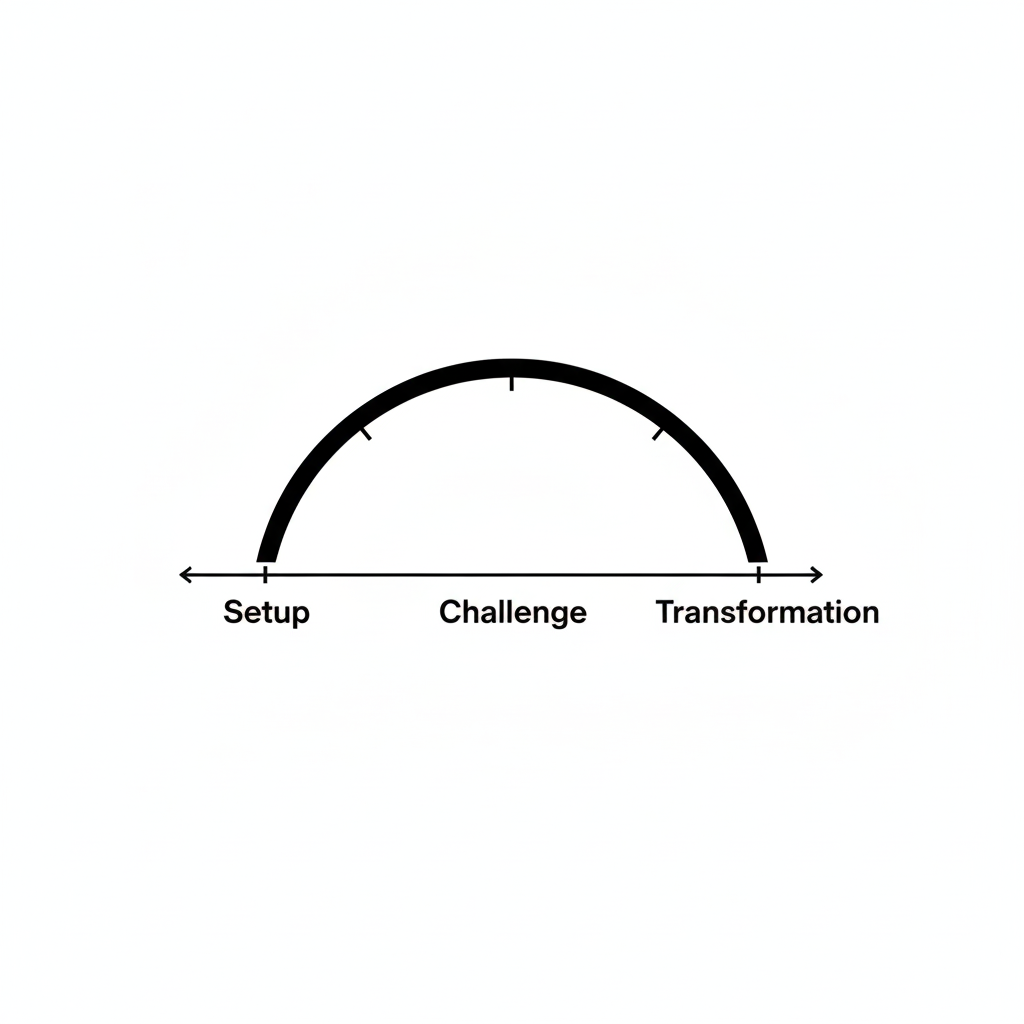
In traditional storytelling, you’ll often hear about five acts — exposition, rising action, climax, falling action, resolution — but when it comes to brand storytelling, I simplify it to three essential points that anyone can apply:
- The Setup
- The Turning Point (or Challenge)
- The Transformation
I’ve found that this three-point version is easier for entrepreneurs, creators, and students alike to apply — especially when they’re trying to bring authenticity and clarity to their brand voice.
1️⃣ The Setup: Where the Story Begins
This is the “before”. It’s where your audience gets to know who you are and the world you existed in before your growth began.
For example, when I work with clients on their brand story, this is where we uncover their origin moment — the reason they started what they’re doing. Maybe it was frustration, a problem they couldn’t ignore, or a calling they couldn’t shake.
When I teach this to my students, I tell them: “Your setup is the soil your story grows from.” It’s not perfect, but it’s real. People need to see where you started before they can appreciate how far you’ve come.
Tip: In your brand content, your setup could look like a post that says, “I used to…” or “Back when I first started…” These simple phrases invite your audience into your beginning.
2️⃣ The Turning Point: The Moment of Challenge or Change
This is where everything shifts. Every story has a moment that challenges the main character — and in branding, that “main character” might be you or your audience.
When I coach my clients through storytelling, this is usually where we find their most powerful brand message. It’s not about perfection; it’s about vulnerability and transformation.
For example, one of my clients who makes jewelry didn’t want to focus on making flashy reels — she wanted to make pieces from interesting places that told a story. Her turning point wasn’t about social media trends; it was realizing that her process was the story. Once she embraced that, her brand became more authentic, more sustainable — and more her.
With my students, I teach them to ask, “What changed?”
That question helps them find the emotional heartbeat of their story.
3️⃣ The Transformation: The Resolution & The Invitation
Here’s where we see the results of the journey. It’s the “after.” The moment your story turns into a message.
For a brand, this is the point where you show the outcome — not just what changed, but how that change can help others.
When I’m working with entrepreneurs or thought leaders, I always ask them to visualize their transformation as both personal and public. For example:
- Personally, how did this experience change you?
- Publicly, how can that transformation serve your audience?
That’s what makes your brand story more than just content — it becomes a bridge between your purpose and your people.
Tip: In your content, this might look like a testimonial, a “what I learned” post, or a visual of your new reality. The key is to end your arc by inviting your audience to see themselves in your transformation.
Why This Matters for Your Brand Story
Here’s what I’ve learned after years of storytelling — both in classrooms and in branding sessions:
Most people are already living incredible stories; they just haven’t learned how to frame them.
A strong story arc does three things for your brand:
- It builds connection.
People relate to struggle more than success. Showing your growth journey builds emotional credibility. - It provides structure.
When your message has a beginning, middle, and end, people can follow it easily. There’s a flow that keeps them engaged and wanting to know “what happens next.” - It creates action.
A good story doesn’t just inspire — it moves people to act. When your brand story reflects transformation, your audience naturally wants to be part of that journey.
How to Craft Your Brand’s Story Arc
Try this quick exercise I give my clients and students:
| Point | Prompt | Example |
|---|---|---|
| Setup | What’s the situation or struggle that started it all? | “I was working full-time and building my dream on weekends.” |
| Turning Point | What challenge or decision changed everything? | “I realized burnout wasn’t the badge of success — it was a signal to realign.” |
| Transformation | How did you change, and what do you help others with now? | “Now, I teach others how to build sustainable brands rooted in ease and alignment.” |
Once you have these three parts, you have the foundation for every piece of content — from your bio to your about page to your Instagram captions.
Your Story Is Your Strategy
Whether I’m working with students learning to tell digital stories or entrepreneurs clarifying their brand message, I always say: “Your story isn’t just content — it’s context.”
It gives meaning to what you do, shapes how people see you, and becomes the magnet that attracts your ideal audience.
The next time you’re crafting a post, a pitch, or a campaign, ask yourself — does it have these three points: Setup, Turning Point, and Transformation?
If it does, you’re not just telling a story — you’re building a brand that people will remember.